

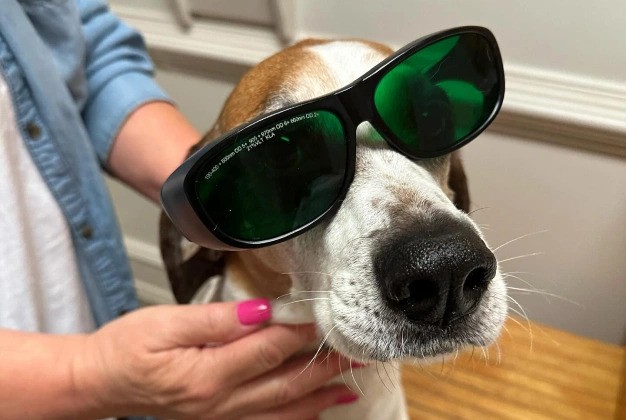
As pet owners, we want nothing more than to see our furry companions in good health. When they face injury, surgery, or chronic pain, we often seek the best treatments available to ensure they heal quickly and comfortably. One such innovative treatment is veterinary laser therapy, a non-invasive technique that helps pets recover faster by promoting healing at the cellular level. This blog will explore how veterinary laser therapy works, its benefits, and how it can significantly enhance the recovery process for pets at River’s Edge Animal Hospital.
What is Veterinary Laser Therapy?
Veterinary laser therapy uses low-level lasers (or light) to treat various conditions in pets. This technique is designed to stimulate the cells in the body, encouraging natural healing processes. The laser light penetrates the skin and tissues, promoting blood flow, reducing inflammation, and enhancing the body’s ability to repair itself. Unlike surgical lasers, which are used for cutting tissues, the lasers used in veterinary laser therapy are low-energy, making the treatment non-invasive and pain-free.
How Does It Work?
The laser light targets specific areas of injury or inflammation, penetrating deep into the tissue without causing harm to the surrounding areas. When the light reaches the cells, it is absorbed by the mitochondria, which are the powerhouses of the cell. This process, known as photobiomodulation, helps increase cellular energy production, which accelerates healing and reduces pain. The treatment encourages a natural response from the body, which can result in a faster recovery time for your pet.
Benefits of Veterinary Laser Therapy
Pain Relief
One of the most significant advantages of veterinary laser therapy is its ability to provide pain relief. It helps reduce the production of pain-causing chemicals and improves circulation to the affected area. Whether your pet is recovering from surgery or dealing with a chronic condition like arthritis, laser therapy can help alleviate discomfort.
Reduces Inflammation
Inflammation is often a major barrier to healing. By targeting the inflamed tissues, the laser light helps to reduce swelling and redness, creating an environment that promotes quicker recovery. For pets suffering from joint pain or soft tissue injuries, laser therapy can significantly improve their mobility and comfort.
Accelerates Healing
As mentioned earlier, laser therapy stimulates the cells responsible for healing. It increases blood flow and collagen production, both of which are vital for tissue repair. This allows your pet to recover faster, whether they’re healing from a sprain, wound, or surgery.
Improves Circulation
Veterinary laser therapy encourages improved blood flow to the treated areas, ensuring that the cells receive the oxygen and nutrients they need to function optimally. Enhanced circulation aids in faster tissue repair and recovery, which can benefit pets recovering from both soft tissue injuries and surgical procedures.
Non-Invasive and Safe
One of the most appealing aspects of veterinary laser therapy is that it is non-invasive. Unlike surgery, there are no incisions or recovery times involved. The procedure is entirely safe, with minimal risk of side effects. Many pets tolerate the treatment very well, and it is generally pain-free.
Treatment for a Range of Conditions
Veterinary laser therapy can be used to treat a variety of conditions, including:
- Arthritis: Reducing inflammation and pain in joints.
- Soft Tissue Injuries: Speeding up recovery from strains, sprains, and tears.
- Post-Surgical Recovery: Helping pets heal after surgery by reducing pain and inflammation.
- Wound Healing: Accelerating the healing process for cuts, abrasions, and surgical sites.
- Dental Pain: Treating inflammation and promoting healing in the mouth.
The Treatment Process
When your pet comes in for a laser therapy session, the procedure is quick and straightforward. The veterinarian will place the handheld laser device on the area of concern, and the laser will emit a gentle light. Depending on the size of the treatment area and the condition being treated, a session can last anywhere from 5 to 15 minutes.
While most pets don’t feel any pain during the treatment, some may experience a soothing, warm sensation. There is no need for sedation, and your pet can remain awake and calm throughout the session. Afterward, your pet can return to their normal activities with minimal restrictions.
When Should You Consider Veterinary Laser Therapy?
Laser therapy is beneficial for many conditions that affect pets. You should consider this treatment if your pet has:
- Recent surgery: To speed up recovery and reduce discomfort.
- Chronic pain: Particularly in cases of arthritis or other long-term conditions.
- Soft tissue injuries: For faster healing of muscle strains, ligament tears, or tendon injuries.
- Infections: Laser therapy can improve blood flow and encourage healing in infected areas.
- Post-traumatic injuries: To reduce inflammation and promote healing after an accident.
Your veterinarian at River’s Edge Animal Hospital will be able to assess your pet’s condition and determine if laser therapy is appropriate as part of their treatment plan.
Veterinary laser therapy offers an innovative, safe, and effective way to help pets heal faster. By reducing pain, decreasing inflammation, and promoting healing at the cellular level, this non-invasive treatment provides numerous benefits for pets recovering from surgery, injuries, and chronic conditions. If you’re looking for a way to help your pet heal more quickly and comfortably, consider talking to your veterinarian about veterinary laser therapy in Rock Hill, SC. At River’s Edge Animal Hospital, we are dedicated to providing the best care for your furry companions.
FAQs
Q1. Is veterinary laser therapy safe for pets?
Ans. Yes, veterinary laser therapy is a safe, non-invasive procedure that has minimal risk of side effects and is well-tolerated by most pets.
Q2. How long does a laser therapy session last?
Ans. A typical session lasts between 5 to 15 minutes, depending on the area being treated.
Q3. Does my pet need sedation for the procedure?
Ans. No, laser therapy is non-invasive, and pets usually remain awake and calm during the procedure.
Q4. How many sessions will my pet need?
Ans. The number of sessions depends on the condition being treated, but many pets require multiple sessions for optimal results.
Q5. Can laser therapy help with arthritis pain in pets?
Ans. Yes, laser therapy is highly effective in reducing inflammation and pain associated with arthritis.
Q6. Is there any recovery time after the treatment?
Ans. No, there is no recovery time needed after laser therapy. Pets can return to their regular activities immediately.
Related Articles