

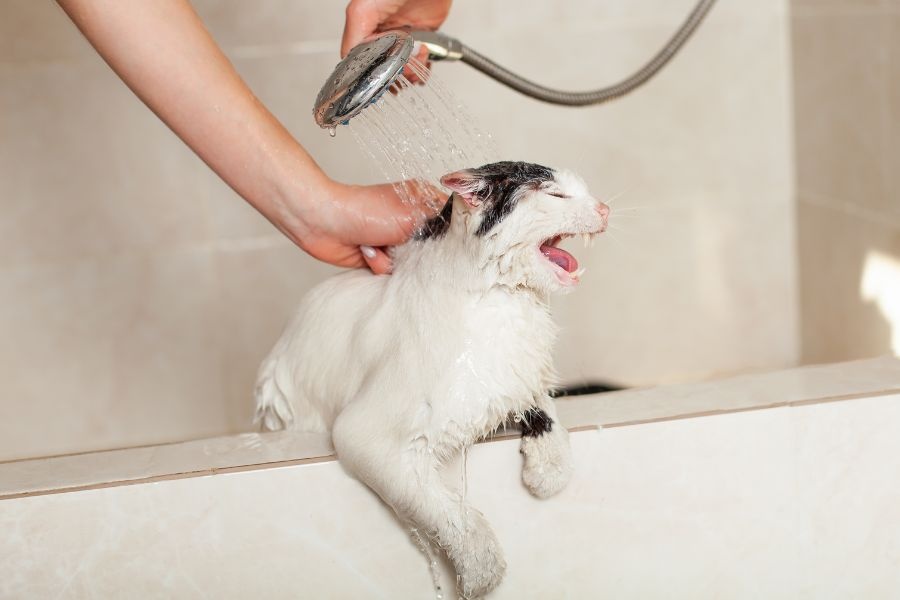
Bathing a cat sounds simple. Until your bathroom looks like a crime scene and you’re nursing three new scratches. The good news? With the right preparation and technique, bath time doesn’t have to be a battle. As a trusted veterinarian, the team at River’s Edge Animal Hospital shares this practical, step-by-step guide to help you bathe your cat calmly, safely, and yes, scratch-free.
Do Cats Actually Need Baths?
Most cats are meticulous self-groomers, and for the majority of healthy cats, baths are not a regular necessity. However, there are times when a bath is absolutely the right call.
Your cat may need a bath if they’ve gotten into something sticky, oily, or toxic. Cats with skin conditions, heavy flea infestations, or certain medical issues may also benefit from medicated baths recommended by your vet. Senior cats or overweight cats that struggle to reach all areas while grooming are another group that can benefit from occasional help.
If you’re unsure whether your cat needs a bath, it’s always a good idea to check in with your veterinarian. A quick wellness visit can tell you a lot about your cat’s skin and coat health.
Setting Yourself Up for Success Before the Water Runs
Preparation is everything when it comes to bathing a cat. Rushing in unprepared is how you end up with a soaking wet, terrified cat and a bathroom full of chaos.
Start by trimming your cat’s nails a day or two before bath time. This one step alone dramatically reduces the damage if your cat does swipe at you. Gather everything you need beforehand: cat-safe shampoo, two towels, a non-slip mat for the sink or tub, a cup or gentle sprayer for rinsing, and a treat reward for afterward.
Choose a small, enclosed space like a sink or a shallow tub. A large open bathtub can feel overwhelming to a cat. Warm the room slightly if possible, and make sure the water temperature is lukewarm. Never hot or cold. Fill just a few inches of water before bringing your cat in; the sound of running water mid-bath can escalate stress quickly.
Step-by-Step: How to Bathe Your Cat Without the Drama
Once you’re set up, here’s how to approach the actual bath in a way that keeps both of you calm.
Step 1: Calm your cat first. Spend a few minutes playing with or petting your cat before heading to the bathroom. A tired, relaxed cat is much easier to bathe than a hyper or anxious one.
Step 2: Lower them in gently. Place your cat in the water slowly, supporting their body fully. Speak in a calm, low voice throughout. Avoid any sudden movements.
Step 3: Wet the coat gradually. Use a cup or handheld sprayer to wet your cat’s coat from the neck down. Avoid getting water in their ears, eyes, or nose, as these are major stress triggers.
Step 4: Apply shampoo and massage gently. Use a cat-specific shampoo (never human shampoo, as it disrupts their skin’s pH balance). Work it into a lather from neck to tail, being gentle around sensitive areas.
Step 5: Rinse thoroughly. Leftover shampoo residue can irritate your cat’s skin and cause them to over-groom. Rinse until the water runs completely clear.
Step 6: Wrap and dry immediately. Have a warm, dry towel ready. Wrap your cat snugly and pat the coat dry, do not rub. Most cats tolerate this part well since the warmth feels comforting. If your cat tolerates it, a low-heat blow dryer held at a distance can help dry the coat faster.
Managing a Cat That Really Doesn’t Want to Cooperate
Some cats are more resistant than others, and that’s completely normal. If your cat becomes highly stressed or aggressive during bath time, don’t push through it. Stop, dry them off, and try again another day with more preparation.
For cats with a history of severe anxiety around bathing, talk to your veterinarian in Rock Hill about options. There are calming supplements, pheromone sprays, and in some cases short-term anxiety medications that can make the experience safer and less traumatic for everyone involved. The goal is always a calm, positive experience, not a battle of wills.
Never scruff your cat (grab them by the back of the neck) as a restraint method during bathing. It may seem effective in the moment, but it causes significant stress and can damage the trust your cat has in you.
After the Bath: Reward, Warm Up, and Watch
Once your cat is dry and back on solid ground, reward them immediately with a treat or their favorite toy. This positive association is key to making future baths easier over time.
Keep your cat in a warm room until their coat is fully dry. A damp cat in a cool room can chill quickly, especially kittens or senior cats. Watch the skin in the days following the bath for any signs of irritation, dryness, or redness. If you notice anything unusual, it’s worth a visit to your vet.
Regular brushing between baths also goes a long way. It keeps the coat clean, reduces matting, and cuts down on how often full baths are needed.
Conclusion: Bath Time Doesn’t Have to Be a Battle
With the right prep, the right products, and a whole lot of patience, bathing your cat can become a manageable and even peaceful routine. The key is going slow, keeping stress low, and always making it a positive experience for your cat. If you ever have questions about your cat’s skin, coat, or grooming needs, the team at River’s Edge Animal Hospital in Rock Hill, SC is here to help.
We are committed to helping pet owners feel confident in every aspect of their cat’s care, from routine grooming to full preventive health. Book your cat’s appointment today and give them the attentive, compassionate care they deserve.
Frequently Asked Questions
Q1. How often should I bathe my cat?
Most cats only need a bath a few times a year, if at all. Cats with skin conditions, long coats prone to matting, or mobility issues that prevent self-grooming may need more frequent baths. Your veterinarian can help you determine the right schedule for your cat.
Q2. What shampoo is safe to use on cats?
Always use a shampoo specifically formulated for cats. Human shampoos, baby shampoos, and dog shampoos are not safe as they can disrupt your cat’s skin pH and cause irritation. If your cat has a skin condition, ask your veterinarian in Rock Hill SC for a medicated shampoo recommendation.
Q3. My cat scratches and bites during baths. What should I do?
First, don’t force it. Stop the bath, dry your cat, and give them space to calm down. Trim their nails before the next attempt, and try calming techniques like pheromone sprays beforehand. If your cat’s anxiety is severe, speak with your vet about safe calming solutions.
Q4. Can I use a blow dryer on my cat?
Yes, with caution. Use the lowest heat setting and hold the dryer at least 12 inches away from your cat’s body. Keep it moving and watch for signs of overheating or stress. Many cats tolerate it once they’re used to the sound, especially when introduced gradually.
Q5. Is it normal for my cat to groom themselves more after a bath?
Yes, some post-bath grooming is completely normal. Your cat is redistributing their natural oils and getting their scent back to normal. However, excessive licking or scratching after a bath may indicate leftover shampoo residue or skin irritation, which is worth checking with your vet.
Related Articles