
When a cat comes home after a surgical procedure, the first few hours can feel unfamiliar for both the pet and the family. Your cat may be sleepy, less interested in food, quieter than usual, or hesitant to move. These changes can be part of the normal recovery process, but careful home care is essential for supporting healing and keeping your cat comfortable.
Whether your cat has undergone a routine procedure or a more involved operation, following the veterinary team’s instructions is one of the most important parts of recovery. Proper rest, medication management, incision monitoring, and a calm environment can help your cat progress safely through the healing period.
For families seeking guidance about cat surgery and recovery, understanding what to expect at home can make the experience much less stressful. With thoughtful care and regular observation, you can help your feline companion return to normal activities at an appropriate pace.
Create a Quiet Recovery Space
Cats often prefer privacy when they are not feeling well. Set up a comfortable recovery area before bringing your pet home. Choose a quiet room away from heavy household traffic, loud noises, and other animals.
The area should include:
- A soft, clean bed or blanket
- Fresh drinking water
- A litter box that is easy to access
- Food according to the veterinary team’s instructions
- Comfortable room temperature
- Limited access to furniture that encourages jumping
Keeping your cat in a controlled space can reduce unnecessary movement and make it easier to monitor eating, drinking, urination, and bowel movements.
If your cat normally spends time outdoors, keep them indoors throughout the recovery period unless your veterinarian specifically recommends otherwise.
Follow Medication Instructions Carefully
Pain control is an important part of recovery. Your veterinarian may prescribe medication to help manage discomfort after surgery. Give every medication exactly as directed, including the correct amount and schedule.
Never give your cat human pain medication unless it has been specifically prescribed by a veterinarian. Some medications intended for people can be dangerous or potentially toxic to cats.
Helpful medication habits include:
- Keep a written record of each dose
- Follow the prescribed schedule
- Use the provided measuring device when liquid medication is prescribed
- Store medications safely
- Ask the veterinary team if your cat spits out or vomits a medication
- Never change the dose without veterinary guidance
If giving medication becomes difficult, contact the veterinary team for practical techniques or alternative options when available.
Monitor the Surgical Incision
Checking the incision regularly is an important part of post operative care. Look at the area as instructed by your veterinarian and become familiar with its normal appearance immediately after surgery.
A healing incision may have mild swelling or slight redness depending on the procedure, but significant changes should not be ignored.
Watch for:
- Increasing redness
- Noticeable swelling
- Discharge
- Bleeding
- Opening of the incision
- Unusual odor
- Excessive licking or chewing
- Increasing sensitivity around the surgical site
Do not apply creams, cleaning products, or home remedies to the incision unless your veterinarian recommends them.
Taking a quick look at the incision each day can help you recognize changes early and provide useful information if you need to contact the clinic.
Prevent Licking and Scratching
Cats are naturally curious about anything unusual on their bodies. After surgery, this curiosity can lead to licking, chewing, or scratching around the incision.
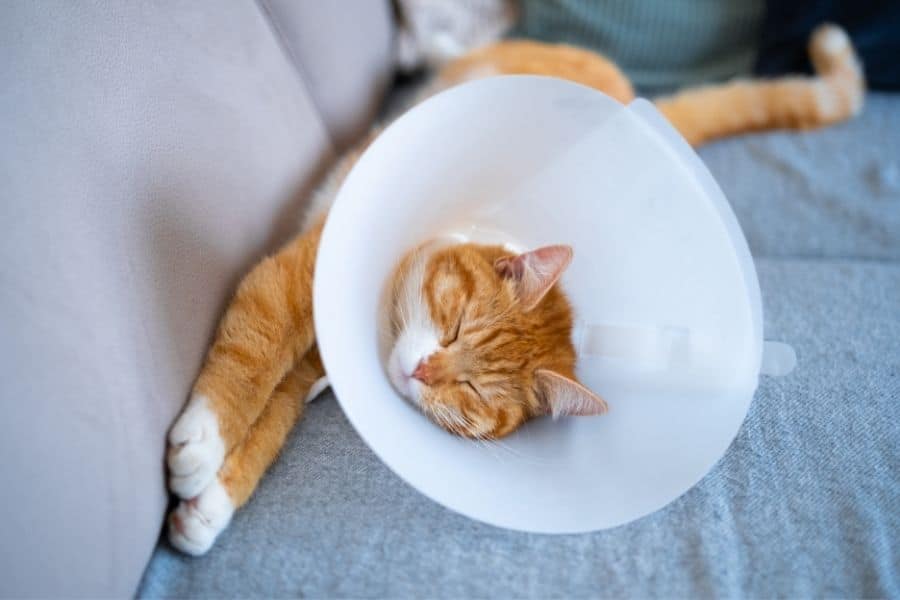
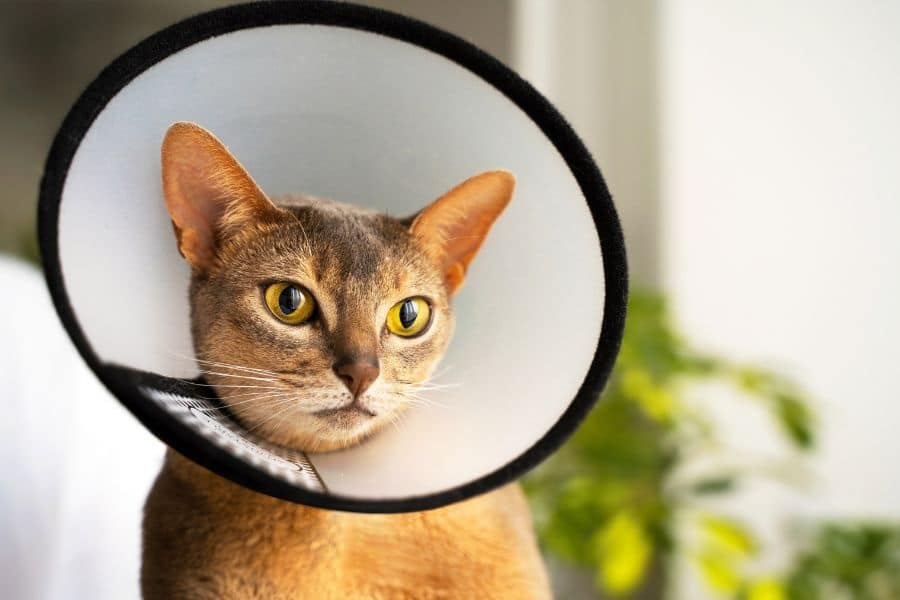
Your veterinarian may recommend a protective collar or another recovery device to prevent your cat from interfering with the surgical area. While some cats initially dislike these devices, preventing access to the incision is often an important part of protecting the healing tissue.
Check that any recommended protective device fits properly and does not interfere with eating, drinking, breathing, or normal movement. If your cat is struggling with it, contact the veterinary team rather than removing it without guidance.
Restrict Running and Jumping
Cats are excellent jumpers, and limiting their activity can be challenging. However, excessive movement may place stress on healing tissues.
Depending on the procedure, your veterinarian may recommend restricting:
- Jumping onto furniture
- Running through the home
- Climbing stairs
- Playing with other pets
- Chasing toys
- Outdoor activity
A smaller recovery room can make activity restriction easier. Keep food, water, bedding, and the litter box nearby so your cat does not need to travel far.
Follow the activity timeline provided by your veterinary team even if your cat appears energetic. Feeling better does not necessarily mean the tissues have completely healed.
Encourage Appropriate Food and Water Intake
Your cat’s appetite may be lower than usual shortly after surgery. Anesthesia, medications, stress, and changes in routine can all influence eating behavior.
Offer food according to the instructions provided by your veterinarian. Avoid suddenly changing your cat’s diet unless recommended.
Keep fresh water available and observe drinking habits. Also monitor whether your cat is using the litter box normally.
If your cat refuses food or water for an unusual period, repeatedly vomits, or develops other concerning symptoms, contact the veterinary team for advice. Individual recovery expectations can vary depending on the procedure and your cat’s overall health.
Keep the Litter Area Clean
A clean litter box provides comfort while also helping you monitor your cat’s recovery.
Choose a litter box that is easy for your cat to enter and exit. If your veterinarian recommends a particular type of litter after surgery, follow those instructions carefully.
Pay attention to:
- Urination frequency
- Bowel movements
- Straining
- Changes in urine appearance
- Difficulty entering the litter box
- Elimination outside the box
Changes in bathroom habits can provide useful clues about how your cat is feeling and should be discussed with the veterinary team when they seem unusual.
Give Your Cat Time to Rest
Rest is one of the simplest and most important parts of recovery. Your cat may sleep more than usual during the first part of the healing period.
Avoid excessive handling unless necessary. Children and other pets should be supervised around a recovering cat. Even a normally affectionate cat may become less social while recovering.
Allow your cat to choose a comfortable resting position while maintaining the activity restrictions provided by the veterinary team.
As your cat begins feeling better, continue following the recovery plan rather than immediately returning to normal play.
Know When to Contact Your Veterinarian
Every cat recovers differently. Some cats regain their normal behavior quickly, while others need several days or longer to settle into their routine.
Contact your veterinary team if you notice significant or worsening changes such as:
- Persistent vomiting
- Severe weakness
- Difficulty breathing
- Significant bleeding
- Increasing swelling around the incision
- Incision separation
- Persistent refusal to eat
- Severe or worsening discomfort
- Major changes in urination or bowel movements
- Repeated attempts to damage the surgical site
When you are unsure whether a change is part of normal recovery, it is better to ask. Your veterinarian knows your cat’s procedure and can provide advice based on their specific recovery plan.
Keep Follow Up Appointments
Follow up care allows the veterinary team to evaluate healing and determine whether your cat is ready to resume normal activities.
Depending on the procedure, the appointment may involve checking the incision, assessing comfort, reviewing appetite and bathroom habits, or removing external sutures if needed.
Do not assume that a cat is fully recovered simply because they seem energetic. Internal tissues may require additional time to heal even after external signs of recovery become less noticeable.
Keeping scheduled follow up appointments is therefore an important part of responsible pet surgical services.
Support a Comfortable Recovery
Caring for a cat after surgery is largely about consistency. A quiet environment, careful medication management, restricted activity, incision monitoring, and appropriate nutrition can give your cat the support needed during healing.
Most importantly, stay attentive to changes in behavior. Cats can be subtle when they are uncomfortable, so knowing your pet’s normal habits can help you recognize when something has changed.
For pet parents considering cat surgery, discussing the recovery plan with your veterinary team before the procedure can also make home care easier. Ask what activity restrictions to expect, how the incision should look, what medications will be prescribed, and which signs should prompt a call to the clinic.
Schedule Post Surgical Care With River’s Edge Animal Hospital
If your cat needs surgical care or you have questions about recovery after a procedure, River’s Edge Animal Hospital is here to support you through every stage of your pet’s care. Our veterinary team can provide individualized guidance for recovery, medication administration, incision monitoring, and activity restrictions.
Contact River’s Edge Animal Hospital to schedule an appointment or learn more about our pet surgical services and how we can help your cat recover comfortably at home.
Frequently Asked Questions
Q1. How long does it take a cat to recover after surgery?
Ans: Recovery time varies depending on the type of procedure, your cat’s age, overall health, and individual healing process. Follow the specific recovery timeline provided by your veterinary team.
Q2. Should my cat eat normally after surgery?
Ans: Some cats have a temporarily reduced appetite after surgery. Follow your veterinarian’s feeding instructions and contact the clinic if your cat refuses food for an unusual period or develops vomiting or other concerning symptoms.
Q3. How can I stop my cat from licking the incision?
Ans: Your veterinarian may recommend a protective collar or another device to prevent licking and chewing. Use the recommended option according to the veterinary team’s instructions.
Q4. Can my cat jump on furniture after surgery?
Ans: Activity restrictions depend on the procedure. Jumping can place stress on healing tissues, so keep your cat from climbing or jumping until your veterinarian confirms that normal activity can resume.
Q5. What should I do if my cat seems uncomfortable after surgery?
Ans: Monitor your cat closely and follow the prescribed pain management plan. Do not give human medications. If discomfort appears severe, worsens, or concerns you, contact your veterinary team for guidance.