Halloween brings costumes, decorations, festive gatherings, and plenty of seasonal treats. While these traditions can be enjoyable for families, they may create additional challenges for dogs and cats living with Chronic Health Conditions. Changes in routine, unfamiliar foods, loud noises, and accidental exposure to hazardous items can affect pets that already need extra attention.
For pet owners in Rock Hill, understanding these seasonal risks is an important part of responsible pet care. A pet with diabetes, heart disease, kidney problems, arthritis, allergies, or another long-term condition may require specific dietary choices, medication schedules, and a calm environment.
Planning ahead can help your companion enjoy Halloween without unnecessary discomfort.
Why Halloween Can Be Challenging for Pets With Chronic Health Conditions
Pets with ongoing medical needs often benefit from predictable routines. Halloween may disrupt those routines through late-night activities, frequent visitors, altered feeding times, and increased household noise.
A healthy pet might tolerate a skipped nap or an unfamiliar treat without obvious problems. However, a pet with a chronic illness may be more sensitive to these changes. Stress can influence appetite, behavior, and existing symptoms, while an inappropriate snack may interfere with a carefully managed diet.
Some pets also take medications at specific times or require regular monitoring. Busy celebrations can make it easier to forget a dose or overlook a change in behavior.
Before Halloween arrives, review your pet’s care instructions and identify anything that needs extra attention. If your companion has a recently diagnosed condition or changing symptoms, consult your veterinarian about preparing for the holiday.
Protect Pets With Diabetes From Halloween Treats
Halloween candy can be particularly risky for pets with diabetes. Many sweets contain high amounts of sugar or carbohydrates that may interfere with a veterinarian-directed feeding plan. Chocolate and certain sugar-free products can also be toxic to pets, regardless of whether they have an existing medical condition.
Keep candy bowls, trick-or-treat bags, chocolate bars, and discarded wrappers in closed containers. Remind children and guests that pets should not receive sweets as a holiday reward.
For a diabetic dog or cat, maintain the established feeding schedule and follow the prescribed dietary plan. Do not make sudden changes to meals or medication simply because the household is celebrating. If your pet refuses food, vomits, seems unusually weak, or behaves differently, contact your veterinary team for guidance.
Ask your veterinarian which treats, if any, are appropriate for your pet. Even foods commonly considered healthy may affect blood glucose management when offered in unsuitable quantities.
Choose Pet-Friendly Halloween Snacks Carefully
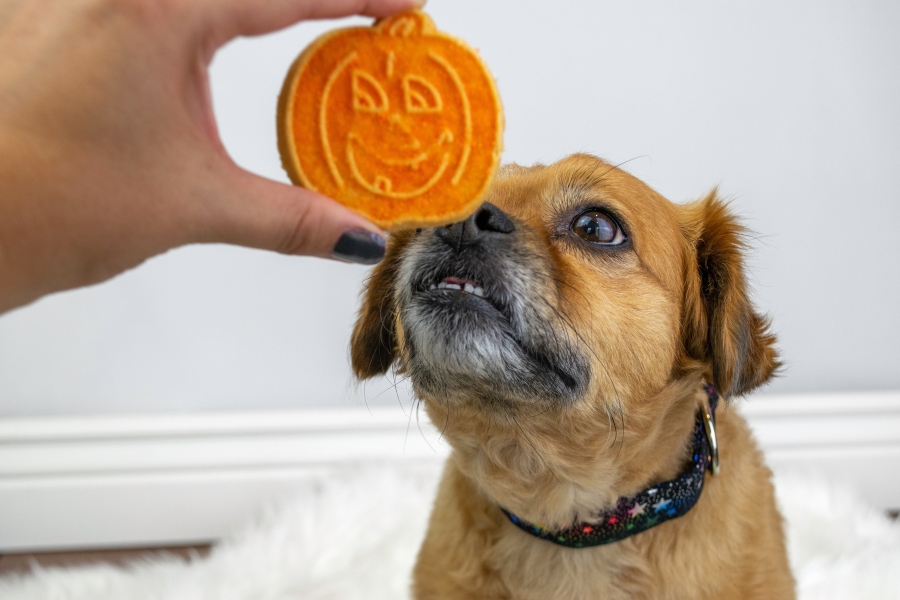
Pet-friendly Halloween snacks can help your companion feel included, but the right choices depend on the animal’s health, nutritional needs, and existing dietary restrictions.
For some pets, a small portion of a familiar veterinary-approved treat may be suitable. Others may need a prescription diet or carefully controlled ingredients that make additional snacks inappropriate. Pets with kidney disease, food allergies, digestive sensitivities, or weight concerns may have particularly specific requirements.
Avoid offering chocolate, candy containing xylitol, raisins, grapes, and heavily seasoned human foods. Keep fatty leftovers and unfamiliar ingredients away from pets, as these may cause digestive problems or other complications.
Even plain foods that are safe for many healthy animals may not suit every pet with a chronic illness. For example, a treat that is high in phosphorus or sodium may conflict with certain veterinary dietary recommendations.
Before introducing a Halloween-themed snack, check its ingredients and discuss its suitability with your veterinarian. If your pet has strict food restrictions, consider non-food rewards such as gentle play, affection, or a favorite activity instead.
Keep Medication Schedules Consistent During Halloween
A busy holiday can make medication routines harder to maintain. Guests may arrive while a pet is due for treatment, children may interrupt feeding time, and late-night activities can cause caregivers to lose track of schedules.
Pets with heart disease, thyroid disorders, arthritis, seizures, or other ongoing conditions may depend on consistent medication administration. Missing a dose, giving an extra dose, or changing the timing without guidance can affect their care.
Create a simple medication checklist before Halloween. Record the medication name, prescribed amount, and scheduled time according to your veterinary team’s instructions. Store medicines securely and keep them separate from candy, snacks, and human medications.
If you realize that a dose has been missed, contact your veterinarian for instructions rather than automatically giving an extra dose. Never change a prescription or use a human medication to manage your pet’s symptoms without professional advice.
Keeping your pet’s care routine steady can make the holiday more manageable for everyone.
Reduce Stress for Pets With Heart or Respiratory Conditions
Doorbells, excited children, loud music, and unfamiliar visitors can cause anxiety in many animals. Pets with heart or respiratory conditions may need additional consideration because intense stress and physical exertion can affect their comfort.
Set up a quiet room away from the main gathering. Include familiar bedding, fresh water, and a comfortable resting place. Keep decorations and potentially hazardous treats out of this space so your pet can relax without interruption.
Limit strenuous activity if your veterinarian has recommended exercise restrictions. Avoid forcing your pet to greet visitors, wear a costume, or remain in a crowded room.
Watch for changes such as unusual panting, coughing, restlessness, or difficulty settling down. Breathing difficulty, collapse, or sudden severe weakness requires immediate veterinary attention. If you notice a new or worsening symptom, seek professional guidance rather than assuming it is caused by excitement alone.
Make Halloween More Comfortable for Pets With Arthritis
Cooler autumn weather, slippery floors, and extra household activity can be challenging for pets with arthritis or mobility limitations. Moving decorations, temporary furniture arrangements, and crowded walkways may also increase the risk of falls.
Keep your pet’s favorite resting place accessible and avoid placing obstacles along familiar routes. Provide nonslip surfaces where needed and make sure food and water remain easy to reach.
Do not encourage an older dog to climb steps, jump onto furniture, or participate in energetic activities if these movements cause discomfort. Cats with arthritis may benefit from accessible resting spots that do not require high jumps.
If your pet wears a costume, make sure it does not restrict movement or put pressure on painful joints. A simple accessory or no costume may be more comfortable.
Continue any veterinarian-recommended pain management plan as directed. Do not give human pain relievers unless specifically instructed by a veterinary professional, as some can be dangerous for pets.
Prevent Accidental Exposure to Halloween Hazards
Chronic illness is not the only concern during Halloween. Decorations, electrical cords, candles, candy wrappers, and seasonal plants can pose risks to pets with and without existing medical conditions.
Chewing an electrical cord can cause serious injury, while swallowing string, plastic, or small decorative objects may lead to digestive tract complications. Open flames can cause burns, and certain foods can be toxic even in small amounts.
Keep decorations securely positioned, cover accessible cords, and use battery-operated lights where practical. Store candy and snacks in closed containers, and dispose of wrappers in covered bins.
For pets that require close supervision or frequent rest, ask a family member to help monitor them while you greet visitors or manage activities. A quiet, pet-safe room can reduce exposure to hazards while allowing the household to celebrate.
Know When to Contact Your Veterinarian
Pets with Chronic Health Conditions may show subtle changes when they are uncomfortable. Reduced appetite, unusual thirst, changes in urination, vomiting, diarrhea, lethargy, or altered breathing should not automatically be dismissed as holiday-related behavior.
Contact your veterinary team if your pet’s symptoms change, medication is missed, or your companion eats something that may be harmful. Provide details about the suspected substance, the amount involved, the time of exposure, and any symptoms you have observed.
If your pet has difficulty breathing, collapses, experiences seizures, or develops sudden severe symptoms, seek immediate veterinary attention.
Pet owners searching online for a veterinarian near me can prepare before Halloween by saving their regular clinic’s contact details and learning how to access veterinary care when the clinic is closed.
For Rock Hill families, knowing where to turn for guidance can help reduce uncertainty if a pet’s condition changes during holiday activities.
Schedule a Visit With River’s Edge Animal Hospital
Halloween can still be enjoyable for pets that need ongoing medical care. The key is to plan around their individual needs, maintain established routines, choose appropriate treats, and provide a quiet place to rest.
River’s Edge Animal Hospital supports pet owners in Rock Hill who want to make informed decisions about their companions’ health and comfort. If your pet has a chronic illness, needs a review of their care plan, or has shown new symptoms, contact the hospital to discuss your concerns.
Reach out to River’s Edge Animal Hospital to ask about available appointment times and online booking options before the holiday. A little preparation can help your pet enjoy a safer, calmer Halloween.
Frequently Asked Questions
Q1. Can pets with diabetes eat pet-friendly Halloween snacks?
Ans: Some treats may be suitable, but ingredients and portion sizes must fit the pet’s individual dietary plan. Ask your veterinarian before offering new snacks, and avoid candy and sugary foods.
Q2. How can I keep my pet’s medication schedule on track during Halloween?
Ans: Use a written checklist or reminder, follow the prescribed schedule, and keep medications securely stored. If a dose is missed, contact your veterinary team for specific instructions instead of giving an extra dose automatically.
Q3. Should pets with heart disease participate in Halloween activities?
Ans: They may be able to enjoy calm activities, depending on their condition and veterinary recommendations. Provide a quiet resting area, avoid strenuous activity if restricted, and monitor for unusual breathing or weakness.
Q4. What Halloween foods should pets with kidney disease avoid?
Ans: Avoid unapproved treats, salty foods, chocolate, grapes, raisins, and unfamiliar leftovers. Some foods may conflict with kidney-related dietary restrictions, so confirm appropriate snacks with your veterinarian.
Q5. When should I seek veterinary advice for a pet with a chronic illness during Halloween?
Ans: Contact your veterinarian for changes in appetite, vomiting, diarrhea, unusual behavior, medication concerns, or suspected ingestion of a hazardous item. Seek immediate veterinary attention for breathing difficulty, collapse, seizures, or sudden severe symptoms.
Related Articles