Your dog’s ears play an important role in hearing, balance, and everyday comfort. However, ear health problems can develop quickly and cause considerable discomfort if left untreated. Frequent scratching, persistent head shaking, unusual odors, redness, and discharge may indicate dog ear infections that require professional veterinary attention.
Many pet owners initially mistake these symptoms for temporary irritation. Unfortunately, ignoring early warning signs can allow an infection to become more severe, potentially leading to chronic inflammation, pain, and hearing complications. Understanding what to look for and when to seek urgent pet care can help protect your dog’s health.
For pet owners in Rock Hill, recognizing changes in a dog’s ear condition is an important part of responsible pet ownership. Whether your companion enjoys outdoor activities, swimming, or spending time at home, regular observation and preventive care can help identify potential problems early.
River’s Edge Animal Hospital encourages pet owners to pay attention to changes in their dogs’ behavior and physical condition. Knowing when to seek professional veterinary guidance can make a meaningful difference in your companion’s comfort and long-term wellness.
What Causes Dog Ear Infections?
Dog ear infections, medically known as otitis, occur when inflammation and microorganisms affect the ear canal. Bacteria and yeast are common contributors, although allergies, parasites, trapped moisture, and foreign objects can also cause ear problems.
Different factors can increase a dog’s likelihood of developing an infection.
1. Moisture Buildup: Frequent swimming and bathing can leave excess moisture inside the ears. A damp environment may encourage bacterial and yeast growth.
2. Allergies: Environmental and food-related allergies can cause inflammation inside the ear canal. Dogs experiencing recurring skin irritation may also develop repeated ear problems.
3. Ear Structure: Dogs with floppy ears, narrow ear canals, or excessive hair around their ears may experience reduced airflow and moisture retention.
4. Ear Mites: These tiny parasites can cause intense itching, inflammation, and dark discharge. Persistent scratching may further damage delicate ear tissues.
5. Improper Ear Cleaning: Excessive cleaning or using unsuitable products can irritate sensitive ear tissues and make existing problems worse.
Identifying the underlying cause is important because treating visible symptoms alone may not prevent future infections.
7 Urgent Ear Infection Symptoms Every Dog Owner Should Recognize
Recognizing changes in your dog’s ears and behavior can help you determine when veterinary attention is necessary. Here are seven warning signs that should never be ignored.
1. Frequent Head Shaking
Occasional head shaking is normal, particularly after bathing or swimming. However, repeated head shaking throughout the day may indicate irritation, trapped moisture, inflammation, or an ear infection.
Dogs often shake their heads to relieve itching or discomfort inside the ear canal.
Persistent shaking can also cause an ear hematoma. This condition develops when blood vessels break inside the ear flap, resulting in swelling and discomfort.
If your dog repeatedly shakes its head without an obvious reason, arrange a veterinary examination.
2. Persistent Scratching Around the Ears
Frequent scratching is another common indication of an underlying ear problem.
Your dog may repeatedly paw at its ears, rub its head against furniture, or drag its ears along carpets and floors.
Although scratching may provide temporary relief, excessive rubbing can cause skin injuries, bleeding, and additional inflammation.
If your companion cannot seem to stop scratching, consult a veterinarian rather than attempting to manage the irritation with household remedies.
3. Unusual or Unpleasant Ear Odor
A healthy dog’s ears should not have a strong or unpleasant smell. A noticeable sour, musty, or foul odor may indicate an infection or excessive microbial growth.
Some pet owners notice an unusual smell before observing other symptoms.
Even if your dog appears comfortable, persistent odor should not be overlooked. A veterinary examination can help determine whether the problem is related to bacteria, yeast, or another underlying condition.
4. Redness and Swelling Around the Ears
Healthy ear canals generally have a natural pink appearance without significant irritation.
Redness, warmth, swelling, or tenderness may indicate inflammation or infection. Your dog may also pull away when someone attempts to touch its ears.
Visible swelling around the ear flap may sometimes indicate an ear hematoma.
Avoid squeezing swollen areas or attempting to clean painful ears. Professional assessment is important to determine the cause and appropriate treatment.
5. Unusual Ear Discharge
Brown, yellow, dark, or pus-like discharge can be associated with different ear conditions.
Some dogs may develop excessive wax buildup, crusting, or fluid around the ear opening. The appearance of discharge can provide useful diagnostic information, but it cannot independently confirm the type of infection.
Avoid inserting cotton swabs or other objects into the ear canal. Doing so can push debris deeper or cause additional injury.
If you notice unusual discharge, arrange a veterinary examination.
6. Head Tilting or Balance Problems
A persistent head tilt is a particularly concerning symptom. It may indicate that inflammation or infection has affected the middle or inner ear.
Other warning signs may include:
- Walking in circles.
- Stumbling or difficulty standing.
- Unusual eye movements.
- Loss of coordination.
- Vomiting accompanied by balance problems.
These symptoms require immediate veterinary attention. Deeper ear involvement can affect your dog’s balance and hearing, making prompt assessment especially important.
7. Pain, Whining, or Behavioral Changes
Dogs experiencing ear discomfort may become unusually quiet, restless, irritable, or reluctant to play.
Some may avoid having their heads touched, whine when their ears are approached, or show changes in appetite and sleeping habits.
Behavioral changes can sometimes be the first indication that something is wrong. If unusual behavior occurs alongside ear-related symptoms, contact your veterinary team.
When Should You Seek Urgent Pet Care?
Not every ear problem requires emergency treatment, but certain symptoms should never be delayed.
Contact your veterinary clinic promptly if your dog experiences persistent head shaking, noticeable discharge, unpleasant odor, redness, swelling, or ear pain.
Seek immediate emergency veterinary attention if your dog develops:
- Sudden loss of balance or difficulty walking.
- A severe or persistent head tilt.
- Repeated vomiting accompanied by balance problems.
- Severe pain or visible distress.
- Significant bleeding or swelling around the ear.
Early assessment can help prevent complications such as chronic inflammation, damage to ear structures, and possible hearing problems.
Pet owners looking for veterinary assistance should choose a professional team that can examine the ear, identify the underlying cause, and recommend an appropriate treatment plan.
How Are Dog Ear Infections Diagnosed?
A proper diagnosis involves more than examining the outside of the ear. Veterinarians may use different examination methods and diagnostic tests to understand the condition.
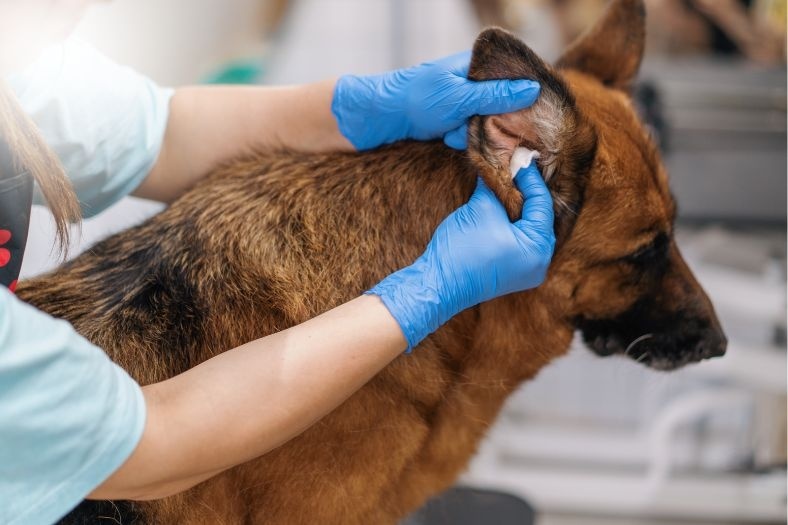
Otoscope Examination: An otoscope allows the veterinarian to inspect the ear canal, identify inflammation, check for foreign objects, and assess the eardrum when visible.
Ear Swab and Microscopic Testing: A sample of ear debris may be examined under a microscope to identify bacteria, yeast, or parasites.
Medical History Review: Your veterinarian may ask about previous infections, allergies, swimming habits, grooming routines, and recent behavioral changes.
Additional Diagnostic Testing: Dogs with recurring or complicated infections may require further testing to investigate underlying health concerns.
Accurate diagnosis helps ensure that treatment addresses the actual cause rather than simply reducing temporary discomfort.
How Are Dog Ear Infections Treated?
Treatment depends on the underlying cause, location, and severity of the infection.
Veterinarians may recommend prescription ear drops, medication to manage inflammation, professional ear cleaning, or oral medication when necessary.
If allergies or another underlying condition contribute to recurring infections, addressing that issue is equally important.
Always follow your veterinarian’s instructions regarding medication dosage, application, and treatment duration. Stopping treatment as soon as symptoms improve may allow the infection to return.
Avoid using leftover medication, human ear drops, vinegar mixtures, alcohol, or hydrogen peroxide unless specifically recommended by your veterinarian. Some substances can irritate inflamed tissues or cause complications if the eardrum is damaged.
Practical Ways to Prevent Recurring Ear Infections
Although not every infection can be prevented, consistent ear care can help reduce certain risk factors.
Consider following these practical recommendations:
- Check your dog’s ears regularly for redness, odor, discharge, and swelling.
- Dry the outer ears gently after swimming or bathing.
- Use only veterinarian-approved ear cleaning products.
- Avoid inserting cotton swabs deep into the ear canal.
- Discuss recurring allergies and skin problems with your veterinarian.
- Maintain regular veterinary examinations.
- Follow professional recommendations for dogs with a history of ear infections.
A routine pet wellness exam can help identify developing health concerns before they become more difficult to manage.
Dogs with recurring ear problems may benefit from an individualized cleaning and monitoring routine based on their breed, lifestyle, and medical history.
Protect Your Dog’s Ear Health With Professional Veterinary Care
Your dog’s ears play an important role in hearing, balance, and everyday comfort. Ignoring early symptoms can allow a manageable condition to become painful and more complicated.
Pay attention to persistent scratching, head shaking, unusual odors, discharge, and behavioral changes. Seeking professional guidance when these symptoms appear can support timely diagnosis and appropriate treatment.
Regular veterinary examinations, proper ear hygiene, and attention to changes in behavior can make a meaningful difference in your companion’s long-term health.
Schedule a Veterinary Appointment Today
Has your dog been scratching its ears frequently, shaking its head, or showing signs of discomfort? Do not wait for the symptoms to become more severe.
Contact River’s Edge Animal Hospital for professional veterinary guidance and care. The veterinary team can help evaluate your dog’s symptoms and recommend appropriate next steps for maintaining healthy ears and overall wellness. Schedule an appointment online to discuss your dog’s symptoms and arrange a veterinary examination. For assistance or appointment inquiries, call: 803-567-5568. Taking action when early warning signs appear can help protect your dog’s comfort, hearing, and quality of life.
Frequently Asked Questions
Q1. What are the most common symptoms of dog ear infections?
Ans: Common symptoms include frequent head shaking, persistent scratching, redness, swelling, unusual ear odor, and increased discharge. Some dogs may also show signs of pain or become unusually irritable.
Q2. Can dog ear infections become serious if left untreated?
Ans: Yes. Untreated infections can worsen and potentially affect deeper ear structures. Complications may include chronic inflammation, significant pain, balance problems, and hearing difficulties. Early veterinary evaluation is important.
Q3. When should I seek urgent pet care for my dog’s ear problems?
Ans: Seek prompt veterinary attention if your dog experiences persistent scratching, discharge, swelling, or ear pain. Head tilting, sudden loss of balance, difficulty walking, or repeated vomiting require immediate emergency veterinary attention.
Q4. Can swimming increase the risk of ear infections in dogs?
Ans: Yes. Excess moisture inside the ear canal can encourage bacterial and yeast growth. Gently drying the outer ears after swimming and following veterinarian-recommended cleaning practices can help reduce certain risks.
Q5. How does a pet wellness exam help maintain healthy ears?
Ans: A pet wellness exam allows the veterinarian to examine your dog’s ears, identify signs of inflammation, discuss recurring symptoms, and recommend preventive care. Regular examinations can help detect developing concerns before they become more serious.