
When was the last time you looked inside your dog or cat’s mouth?
Many pet owners focus on food, exercise, and vaccines, but forget that oral health plays a major role in overall wellness. By age three, most dogs and cats show signs of pet dental disease, even if they seem healthy. Dental problems rarely fix themselves. They worsen quietly and can lead to pain, infection, and damage to vital organs.
This guide breaks down the most common dental conditions in dogs and cats, how to spot early signs, and what steps you can take at home and with your veterinarian. Clear facts. Simple explanations. Practical advice you can use right away.
Why Oral Health Matters More Than You Think
A pet’s mouth is full of bacteria. Without daily cleaning, plaque forms on teeth within hours. Plaque hardens into tartar. Tartar irritates the gums and traps more bacteria below the gumline.
Over time, bacteria can enter the bloodstream. This may affect the heart, liver, and kidneys. What starts as mild bad breath can turn into a serious health issue.
Routine pet dental care reduces these risks and supports longer, healthier lives.
1. Periodontal Disease
What It Is
Periodontal disease is the most common dental condition in dogs and cats. It affects the tissues around the teeth, including the gums and bone.
How It Starts
It begins with plaque buildup. If not removed, plaque turns into tartar. The gums become inflamed, a condition called gingivitis. If untreated, the infection spreads deeper, damaging bone and tooth roots.
Signs to Watch For
- Bad breath that does not go away
- Red or swollen gums
- Bleeding from the mouth
- Loose teeth
- Dropping food while eating
- Pawing at the mouth
Pets often hide pain. Do not wait for obvious discomfort before taking action.
Why Early Care Matters
Early-stage gum disease can be reversed with professional cleaning and improved home care. Advanced stages may require tooth extraction.
2. Gingivitis
Gingivitis is inflammation of the gums and the earliest stage of pet dental disease.
Symptoms
- Bright red gum edges
- Swelling along the gumline
- Mild bleeding during brushing
At this stage, teeth are still secure in the bone. With prompt treatment and consistent brushing, gum health can improve.
If ignored, gingivitis progresses into periodontal disease.
3. Tooth Fractures
Dogs often fracture teeth by chewing hard objects like bones, antlers, or hard nylon toys. Cats may fracture teeth from trauma or falls.
Types of Fractures
- Enamel fracture: Minor chip, may not cause pain
- Complicated fracture: Pulp exposure, very painful
Warning Signs
- Sudden refusal to chew toys
- Favoring one side of the mouth
- Swelling under the eye (possible root abscess)
Broken teeth expose nerves and invite infection. Veterinary evaluation is needed quickly.
4. Tooth Root Abscess
A tooth root abscess is a pocket of infection at the root of a tooth.
Common Causes
- Untreated fractures
- Advanced periodontal disease
Symptoms
- Facial swelling
- Pain when touched
- Fever
- Reduced appetite
Abscesses require professional treatment. Antibiotics alone will not solve the problem long-term. The infected tooth usually needs extraction or root canal therapy.
5. Feline Resorptive Lesions (Cats Only)
Tooth resorption is common in cats. The tooth structure slowly breaks down from the inside.
Signs in Cats
- Drooling
- Jaw chattering when eating
- Sudden sensitivity to food
- Visible red spot at the gumline
Many cats appear normal despite severe pain. Dental X-rays are often required for diagnosis. Extraction is usually the most effective treatment.
6. Oral Tumors
Though less common, oral tumors can occur in both dogs and cats.
Signs to Watch For
- Persistent bad breath
- Bleeding that does not heal
- Growths or lumps in the mouth
- Difficulty swallowing
Any unusual mass should be examined right away. Early detection improves treatment options.
7. Retained Baby Teeth
In some small dog breeds, baby teeth do not fall out when adult teeth grow in.
Why It Matters
Crowding traps food and bacteria, increasing the risk of gum infection. Retained baby teeth should be removed to protect long-term oral health.
How Dental Disease Progresses
Dental disease moves through stages:
- Plaque buildup
- Tartar formation
- Gum inflammation
- Bone loss
- Tooth loss
Once bone is lost, it cannot grow back. This is why consistent pet dental care makes a real difference.
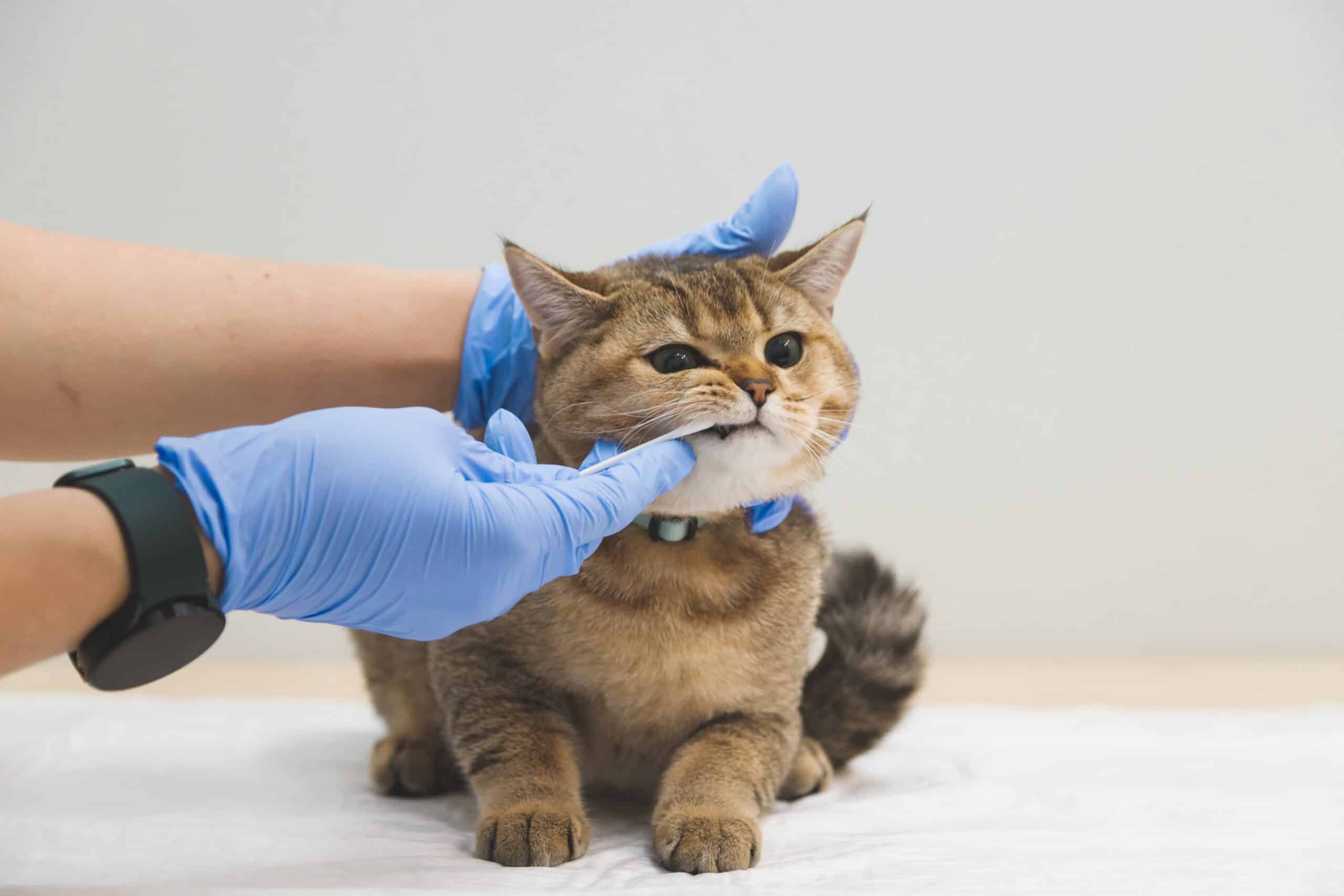
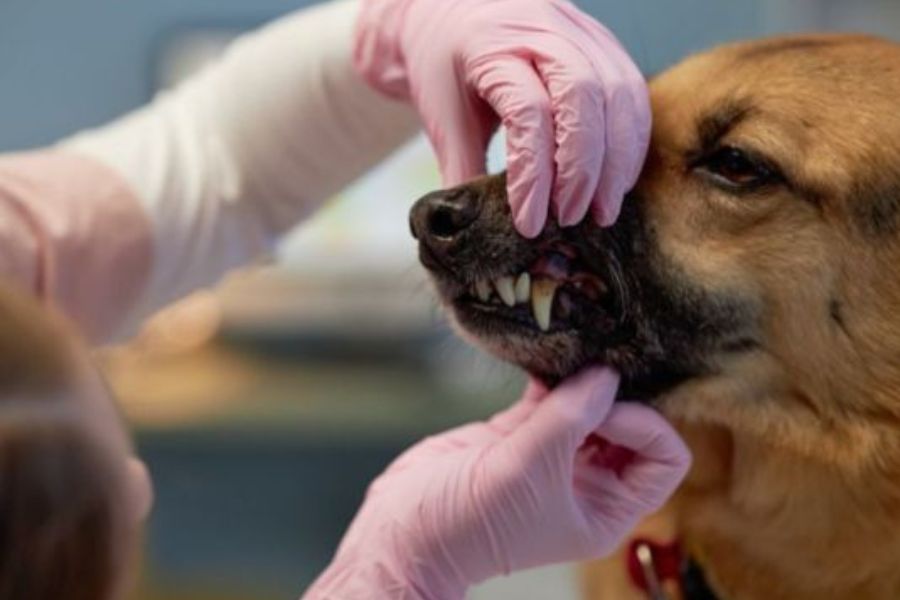
What Happens During a Professional Dental Exam
Many pet owners feel unsure about dental procedures. Here is what typically happens:
- Full physical exam
- Anesthesia for safety and comfort
- Dental X-rays to assess roots and bone
- Scaling to remove tartar above and below the gumline
- Polishing to smooth enamel
- Treatment or extraction of damaged teeth
Anesthesia allows complete cleaning below the gumline, where most problems hide.
Ask your veterinarian for a clear treatment plan and cost estimate. A transparent approach helps you make informed decisions without surprises.
At-Home Prevention: What Actually Works
Prevention is simple when done consistently.
1. Daily Brushing
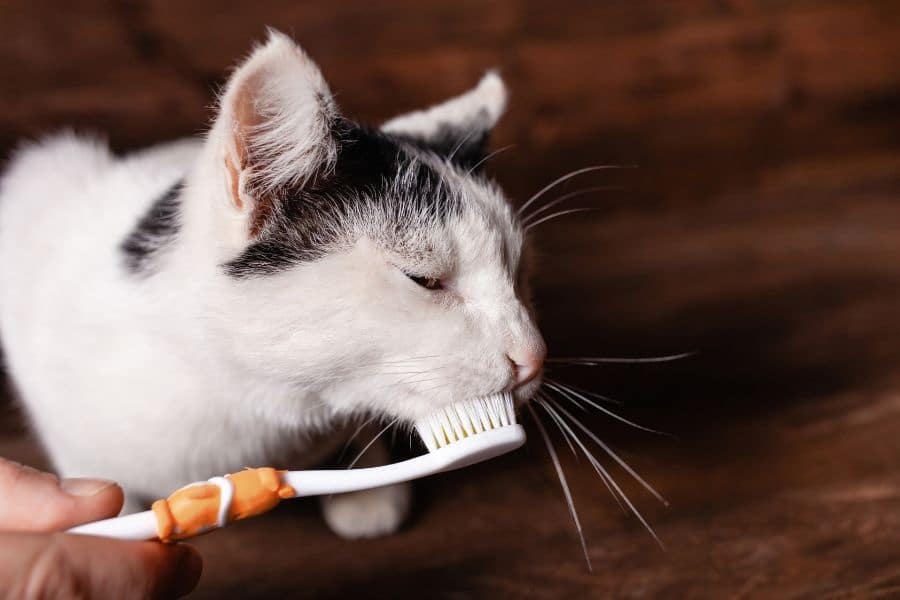
Use pet-safe toothpaste. Human toothpaste is not safe for pets. Start slowly and make it positive.
2. Dental Diets
Some prescription diets reduce plaque buildup through a special kibble texture.
3. Dental Chews
Look for products approved by the Veterinary Oral Health Council (VOHC).
4. Regular Exams
Annual exams help detect early changes before they become painful.
Good pet dental care combines home habits with professional cleanings.
How Often Should Pets Get Dental Cleanings?
Frequency depends on breed, age, and health history.
- Small dogs often need yearly cleanings.
- Large dogs may need them less often.
- Cats vary widely.
Your veterinarian can assess risk and recommend a schedule.
Signs You Should Not Ignore
Contact your veterinarian if you notice:
- Strong odor from the mouth
- Visible brown buildup
- Difficulty chewing
- Swelling near the eyes
- Sudden behavior changes
Dental pain changes behavior. A quiet pet may become withdrawn. An active dog may seem tired.
The Cost of Waiting
Untreated pet dental disease leads to:
- Chronic pain
- Systemic infection
- Tooth loss
- Emergency procedures
Early care costs less and protects the quality of life.
Making an Informed Decision
Dental health is not cosmetic. It is medical care. You do not need to guess when something feels off.
Ask questions during checkups:
- How advanced is the condition?
- Are X-rays needed?
- What are the treatment options?
- What can I do at home?
Clear communication supports better outcomes.
Conclusion: Take the Next Step for Your Pet’s Oral Health
Dental disease develops quietly but affects the whole body. The good news is that it is preventable and manageable with steady attention.
If your dog or cat shows signs of discomfort, bad breath, or gum changes, do not wait. Early evaluation protects long-term health and prevents unnecessary pain. Talk with your veterinarian about your pet’s risk level and whether it is time to schedule a consultation with River’s Edge Animal Hospital.
Strong teeth and healthy gums support better eating, better comfort, and a longer life. Small steps today make a lasting difference.